


No results found
We couldn't find any products matching these filters.
Clear filters and see all products
Looking for a specific fabric? Tell us what you need and we'll help track it down. Email us at help@onlinefabricstore.com
Craftwork & Fabric Project Guides
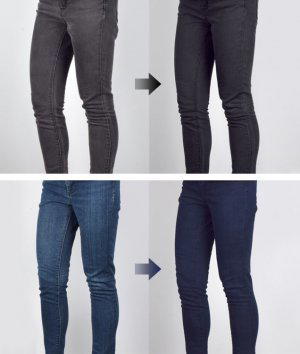
If you've got a faded pair of jeans that you want to revive, why not dye them? I'm using Black Dylon Permanent Dye for one pair and Denim Blue Rit All-Purpose Dye for another pair. You can use either type of dye for both denim blue and black. You can also try different colors for unique looks.
View this tutorial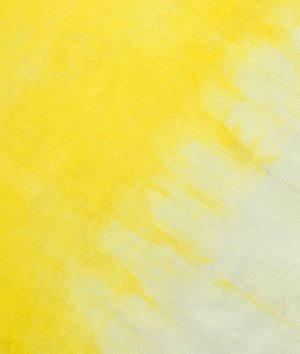
We've tried lots of dyeing techniques in the past, but this time we're keeping it natural. I'm going to use ground turmeric and a head of cabbage to dye some unbleached muslin. I'm also adding some salt and vinegar to make it more vibrant.
View this tutorial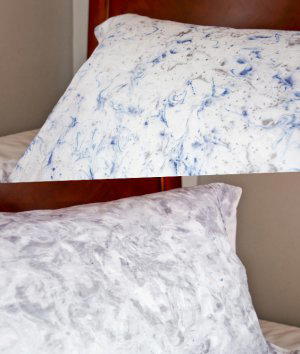
Marbling's been around for centuries. It mimics a natural design that's found in stone (or a nice rib eye). You've probably seen the marbling technique used on things like end papers in a book, or in a stationary store. But did you know that you can marble fabric, too? I'm going to be using liquid Rit Dye and shaving cream to deck out some plain white pillowcases.
View this tutorial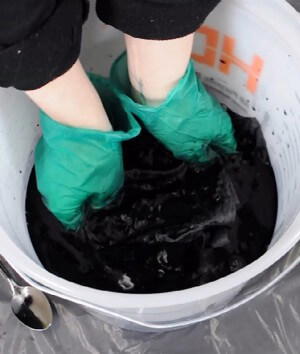
Since dye is one of the quickest and easiest ways to add color to a project or to an existing piece of fabric, today I'm going to be demonstrating a simple immersion technique using Rit Dye. Rit Dye is great for all skill levels because it contains a mixture of several different types of dye, making it a really great option if you want to dye something that's a blend or contains multiple kinds of fibers. For polyester and other synthetic materials, use Rit DyeMore.
View this tutorial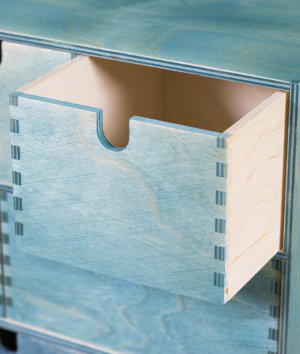
Fabric dye isn't just for fabric. You can use Rit dye to stain wood and wicker as well. This adds color without covering the grain of the wood. The finish has greater texture and dimension than paint. Today, I'm staining an unfinished set of drawers.
View this tutorial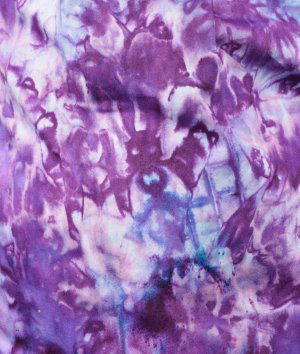
Ice dyeing is a really fun technique with unexpected and beautiful results. Cathy, Jen, and I each dyed an item using different dyes, colors, and ways of manipulating the fabric. Watch the video or read below to see how they turned out! We used Rit Powder Dye and Dylon Dye. We also have many more awesome dyeing techniques that you can find here.
View this tutorial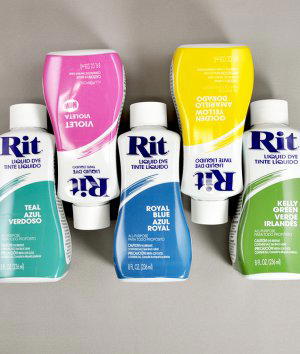
With Rit All-Purpose Dye you can dye fabrics containing natural fibers, like cotton, linen, wool, or silk, and also rayon and nylon. It comes in a variety of colors that you can mix to get an infinite amount of colors. If you want to dye polyester and other synthetic fibers, see our Rit DyeMore Synthetic Fiber Dye Product Guide here or read this article about all our fabric dyes. Shop all Rit dyes here. Fabrics with different fiber contents will not dye the same.
View this guide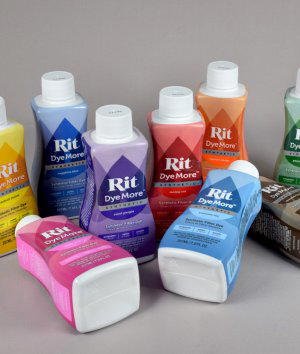
Discover the endless possibilities with Rit DyeMore Synthetic Fiber Dye. Ideal for dyeing polyester, nylon, acrylic, rayon, and poly/cotton blends, it comes in a variety of colors that you can mix to get an infinite amount of shades. Read our article on fabric dye for more information about the dyes we carry. Shop all Rit dyes here. Fabrics with different fiber contents will not dye the same.
View this guide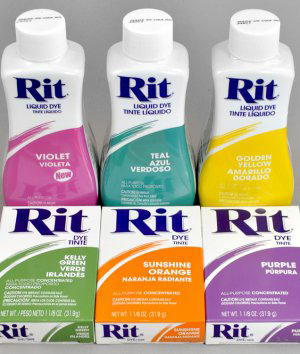
Fabric dye is used on fabric or clothing to dye it a different solid color, or you can use techniques to create unique patterns. Rit Dye and Dylon Permanent Fabric Dye work in different ways and each have their own strengths. With Rit DyeMore Synthetic Fiber Dye you can now dye polyester, nylon, acrylic, rayon, and poly/cotton blends. You can find it with our other Rit liquid dyes.
View this guide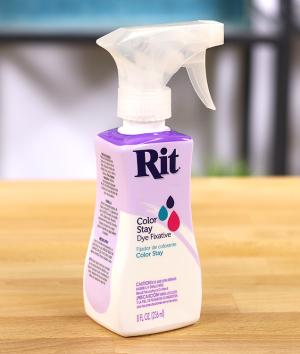
Rit ColorStay Dye Fixative greatly enhances the color retention of items dyed with Rit dye. Use it after dyeing but before rinsing to enhance the color and prevent fading over time. It works on cotton, linen, silk, wool, and rayon. You can also use this Rit Dye Perfection Kit which includes color remover, dye fixative, and a spray nozzle.
View this tip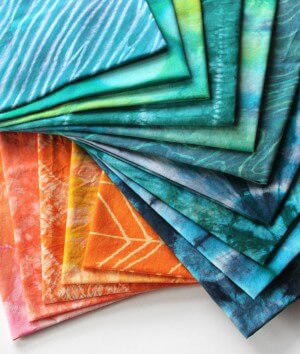
There are so many fabric dyeing techniques that produce gorgeous and diverse results. Today, I'll show you 8 different fabric dyeing methods with video tutorials. All of these techniques are demonstrated using Rit Dye, which is an all-purpose dye, but you can also use other types of dye like fiber reactive dyes to get the same results. Just check your dye's instructions to figure out how much to use, how long to keep it in the dye bath, water temperature, how to fix it, etc. For the basic method of dyeing fabric a solid color with Rit Dye, see our Rit All-Purpose Fabric Dye Product Guide and Rit DyeMore Synthetic Fiber Dye Product Guide.
View this article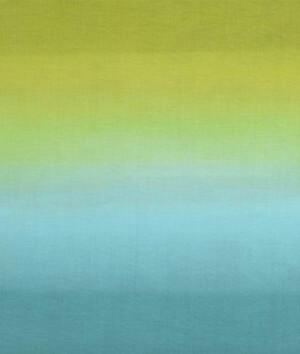
Ombre is popular in fashion, hair, and decor. It describes the blending of one color to another or light to dark. This gradient is easy to create by dip dyeing fabric or clothing. You can ombre pre-made items like shirts, dresses, curtains, or pillow covers, or dye fabric and use it to create something of your own.
View this tutorial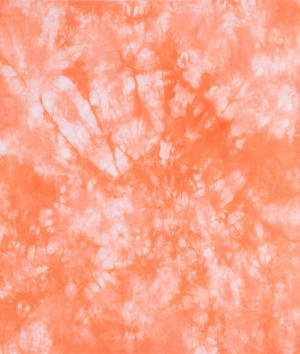
The low water immersion technique will create a mottled, uneven effect when dyeing fabric. By using little water and tightly packing the fabric, you'll get a strong pattern like this, or use more water and get a subtler result. You can also create other patterns by tying or folding the fabric in different ways.
View this tutorial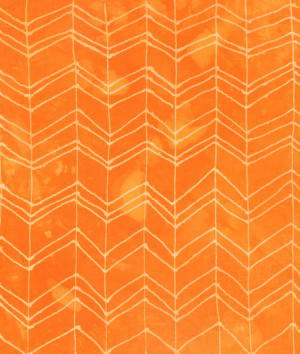
Batik fabric is traditionally made using wax as a resist. Designs are created by painting or stamping hot wax onto the fabric and then dyeing it. The wax stops the dye from penetrating the fabric. You can create a similar effect much more easily by using glue instead of hot wax.
View this tutorial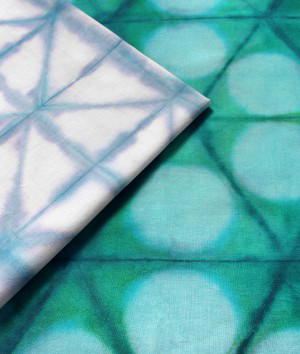
With the Shibori folding technique, you can create geometric patterns like squares, triangles and hexagons by simply folding the fabric in different ways. You can also clamp flat objects to both sides of the fabric before dyeing. The area that is covered will remain white, adding another element to the pattern.
View this tutorial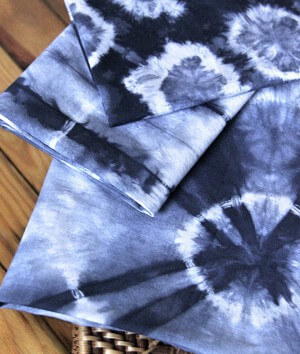
Tie dye is a form of Shibori, which is the ancient Japanese art of dyeing fabric. There are many different forms of Shibori including folding, stitch resist, and pole dyeing. In this example I'm going to tie fabric with rubber bands to get 3 different dyeing effects. Get creative with different ways of tying the fabric. You never quite know how it's going to turn out, but you can get some unexpected and beautiful results by experimenting.
View this tutorial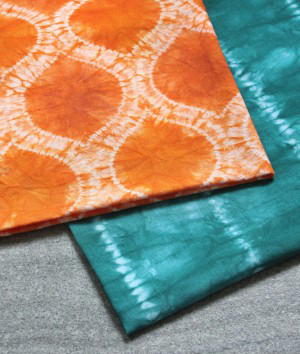
This Shibori dyeing technique uses thread to create a pattern. The stitches act as a resist so the dye can't penetrate certain areas of the fabric. With this method you can basically draw with the thread to create detailed designs. With Shibori stitch resist, the possibilities are endless, so experiment with different designs and multiple colors to get beautiful and unique results. Want to get the orange ogee pattern and the printable PDF instructions?
View this tutorial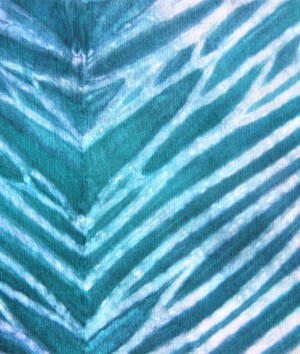
With the Shibori pole dyeing technique, you can create unique striped patterns. They can range from fairly regular lines to fluid, ripple-like stripes. Experiment with different ways to wrap the pole and multiple colors to create unique patterns of your own.
View this tutorial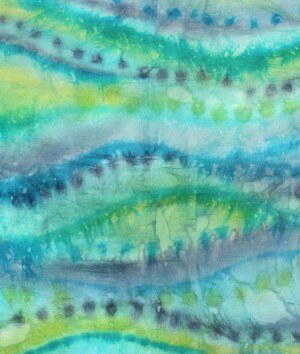
By painting fabric with dye, you can create beautiful watercolor effects by blending and bleeding colors. It can be as simple or complex as you want. I actually like how the back side turned out better because there was more bleeding and the plastic under it created some interesting effects. You can combine this painting method with other techniques like batik dying or create a multi colored ombré.
View this tutorial
Over the years, we have experimented with many different methods of dying fabric. All of which yielded beautiful results, but usually required a decent amount of work leading up to and during the dying process. But what if you want a nice all over dye without the fuss? I knew that RIT dye could be used in the washing machine but I had never tried it for myself, until today, and I am so glad that I did. The overall color was brilliantly saturated, and even.
View this tutorial
You've been asking the questions and we have been hearing you. Now, we are here to bring you a series about dyeing fabric so you can be the most informed you can be before you start dying!
View this article
We get asked question all the time on our dying videos about really general and really specific projects that you guys are working on. Dying is something that takes a long time to perfect, and most people only do it when they are in a pinch. We know that knowledge is power though, so we decided to start a series about dying. We looked through your FAQ's, found some common themes, and used our knowledge to run some experiments. So this is the first of many, but we started with questions revolving around the theme of "what happens when…?
View this tip-
{{#each productSuggestedQueries.results}}
- {{query}} {{/each}}
-
{{#each categories.results}}
- {{html title}} {{/each}}
{{html attributes.description}}
{{/if}}-
{{#each queries.results}}
- {{query}} {{/each}}